Auto Commercial Insurance Quotes
Auto Commercial Insurance Quotes: A Complete Guide for Business Owners
Auto commercial insurance quotes are one of the most important tools a business owner can use when protecting company vehicles, drivers, and daily operations. Whether you run a delivery service, contractor business, rideshare fleet, or small local company with one van, understanding commercial auto coverage helps you make smarter financial decisions. This guide explains how quotes work, what affects pricing, what coverage you need, and how to compare policies for better value and stronger business protection.
What Are Auto Commercial Insurance Quotes?
Auto commercial insurance quotes are price estimates provided by insurers for coverage designed specifically for vehicles used for business purposes. These quotes reflect the risk profile of your company, the type of vehicles you own, how employees use them, and the level of coverage you select. Unlike personal auto insurance, commercial policies protect business assets and can address higher liability risks. A quote helps you understand expected premiums before choosing a policy or changing your current coverage.
Commercial auto insurance quotes are not all built the same. One insurer may include broader liability protection, while another may offer lower premiums but fewer endorsements or stricter limits. That is why a quote should never be judged on price alone. Business owners need to review deductibles, exclusions, claim support, and policy structure. A well-prepared quote gives a realistic picture of coverage costs and helps companies avoid expensive protection gaps that could affect operations or legal liability.
Why Commercial Auto Insurance Matters for Businesses
Any business that owns, leases, or regularly uses vehicles for work should seriously consider commercial auto insurance. Personal auto policies often exclude accidents that happen during business use, especially if the vehicle transports tools, goods, employees, or customers. If a crash occurs during work hours, a business may face repair bills, medical expenses, lawsuits, and downtime. Commercial insurance helps reduce those risks by offering tailored protection that supports business continuity and financial stability.
Businesses in construction, food delivery, courier services, real estate, landscaping, and mobile repair often rely on vehicles every day. Even one accident involving a company car or truck can create serious financial pressure. Auto commercial insurance quotes allow business owners to see what protection costs before a loss occurs. Instead of guessing what coverage is needed, they can compare options based on actual business exposure. This planning step is essential for companies that want predictable expenses and stronger legal protection.
Who Needs Auto Commercial Insurance Quotes?
If your business uses a vehicle beyond occasional commuting, you likely need auto commercial insurance quotes. This includes companies with owned vehicles, rented vans, employee-driven work trucks, or personal vehicles used for business duties. Sole proprietors, partnerships, and corporations all face liability when a vehicle is used to serve clients or transport business property. Quotes help determine what type of policy best fits your operations, whether you have a single work van or a full commercial fleet.
Many business owners think commercial auto insurance only applies to large companies with branded trucks. In reality, small businesses often need it just as much. A photographer driving to client locations, a florist making deliveries, or a plumber carrying equipment may all require commercial coverage. Insurance companies look at business use differently from personal use. Getting several auto commercial insurance quotes is the easiest way to identify whether your current policy is enough and what extra protection may be necessary.
How Auto Commercial Insurance Quotes Work
Auto commercial insurance quotes are generated after an insurer reviews information about your business and driving risk. This usually includes vehicle type, age, location, number of drivers, annual mileage, business operations, claims history, and desired coverage limits. Some insurers provide quick online quotes, while others require agent support for more complex businesses. The quote is based on estimated exposure, so accuracy matters. Incomplete or incorrect details can lead to pricing changes later during underwriting.
Once the insurer receives your business details, it calculates the potential risk of paying future claims. Companies with safer drivers, lower claim frequency, secure vehicle storage, and moderate mileage may receive more affordable commercial insurance quotes. Higher-risk operations, such as delivery businesses or companies driving in congested urban areas, usually pay more. The quote may also include optional protections, discounts, and deductible choices. Reviewing each part carefully helps business owners understand what they are paying for and why.
Key Coverage Included in Commercial Auto Insurance
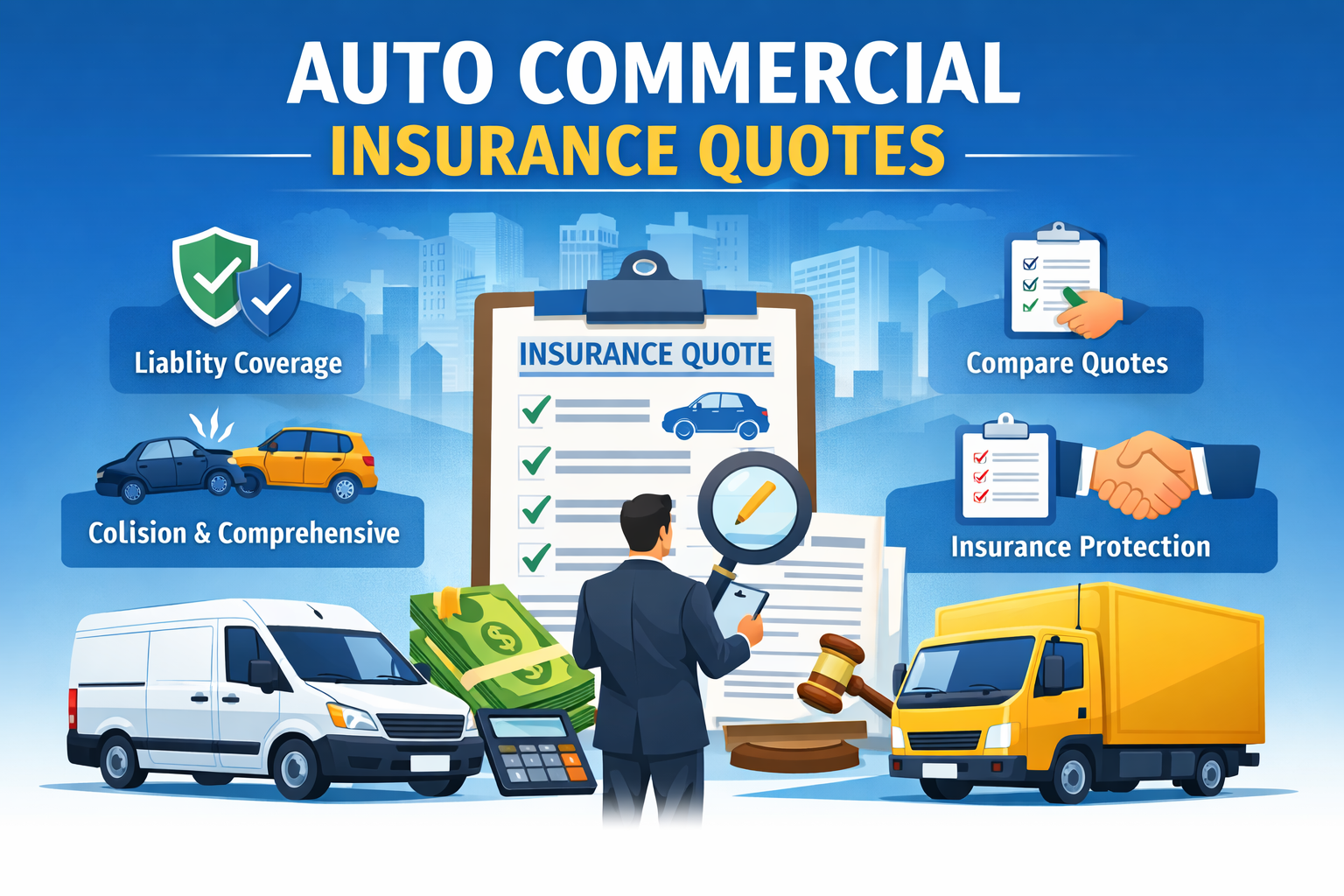
Most auto commercial insurance quotes include several core coverage types that protect both the business and its vehicles. Liability coverage is usually the foundation, helping pay for injuries or property damage caused to others in an accident. Collision coverage pays for damage to your own vehicle after a crash, while comprehensive coverage protects against non-collision losses such as theft, vandalism, fire, or weather damage. Together, these coverages create a stronger insurance foundation for daily business use.
Additional coverage options may include medical payments, uninsured or underinsured motorist protection, hired and non-owned auto coverage, roadside assistance, rental reimbursement, and cargo or equipment endorsements. These add-ons can be especially valuable for businesses that depend on vehicles to maintain cash flow. When comparing auto commercial insurance quotes, always check which protections are included automatically and which are optional. A cheaper policy may look attractive at first, but could leave your business exposed when a serious claim happens.
Liability Coverage
Liability coverage is often the most important part of any commercial auto policy because it helps protect the business from costly third-party claims. If your employee causes an accident while driving a company vehicle, liability insurance may pay for medical bills, legal expenses, settlement costs, and property damage to others. Because business claims can be larger than personal claims, commercial liability limits are often higher. Reviewing these limits carefully is essential when requesting auto commercial insurance quotes.
Many contracts, leases, and client agreements require proof of commercial auto liability insurance before work begins. That means your quote should align with business obligations, not just state minimums. Choosing low limits to save money can create serious problems if an accident leads to a lawsuit. A single severe claim can affect business savings, future income, and reputation. Strong liability coverage may cost more upfront, but it often provides much better long-term value and protection for business owners.
Physical Damage Coverage
Physical damage coverage usually includes collision and comprehensive insurance for your business vehicles. Collision helps repair or replace the covered vehicle after an accident, even if your driver caused the crash. Comprehensive coverage protects against theft, falling objects, glass damage, flood loss, hail, vandalism, and similar events not involving a direct collision. These protections matter for businesses that rely on their vehicles every day. Without them, repair costs can quickly interrupt operations and reduce revenue.
When reviewing auto commercial insurance quotes, business owners should compare deductible levels and actual cash value terms. A lower deductible increases premium cost but reduces out-of-pocket expenses during a claim. A higher deductible lowers monthly premiums but requires the business to absorb more upfront cost after damage. The right balance depends on cash flow, vehicle value, and risk tolerance. For financed or leased vehicles, lenders may also require physical damage coverage, making it a necessary part of the policy.
Factors That Affect Auto Commercial Insurance Quotes
Several pricing factors influence auto commercial insurance quotes, and understanding them can help businesses control costs. Vehicle type plays a major role because larger trucks, specialty vehicles, and high-value units are usually more expensive to insure. Driver records also matter greatly, since accidents, violations, and inexperience often increase premiums. Insurers may review where vehicles are parked, how far they travel, and whether they operate in busy city traffic. Every detail contributes to the final premium.
The nature of your business also affects commercial auto insurance pricing. A florist making short local deliveries may present less risk than a courier company with strict deadlines and frequent road exposure. Claims history, years in business, and chosen policy limits can also influence the quote. Even credit-based insurance scores may matter in some markets. By understanding these elements, business owners can improve their profiles, request more accurate quotes, and identify realistic ways to reduce overall insurance expenses.
Vehicle Type and Usage
Insurers pay close attention to how vehicles are used because usage directly affects accident frequency and claim severity. Vehicles used for local errands may cost less to insure than those transporting heavy materials or making constant deliveries. Specialized commercial vehicles, such as dump trucks, tow trucks, and refrigerated vans, often carry higher premiums because they involve more complex risks and repair costs. Accurate vehicle classification is essential when requesting auto commercial insurance quotes for meaningful and dependable pricing.
Mileage is another important factor tied to vehicle use. The more time a vehicle spends on the road, the greater the chance of accidents, damage, or liability claims. Businesses with predictable routes and limited travel may benefit from better rates. Insurers may also ask whether vehicles cross state lines, operate at night, or carry hazardous materials. Each answer shapes the risk calculation. Clear, honest details help you receive quotes that reflect your business accurately and prevent surprises later.
Driver History and Experience
Driver history is one of the strongest rating factors in commercial auto insurance. Insurers usually examine license status, years of driving experience, accident history, and moving violations for each person operating a business vehicle. A clean driving record often leads to better pricing, while repeated tickets or at-fault accidents can raise premiums sharply. Businesses that hire young or inexperienced drivers may also pay more. Safe hiring practices can make a noticeable difference when collecting insurance quotes.
Some insurers reward companies that enforce driver safety programs, use telematics, or perform regular motor vehicle record checks. These steps show a commitment to risk management and may lead to more competitive auto commercial insurance quotes. If a business has multiple drivers, one poor record can influence fleet pricing. That is why many companies screen drivers carefully and remove high-risk behaviour early. Strong driver management not only improves insurance results but also reduces accident-related disruption across the business.
How to Compare Auto Commercial Insurance Quotes
The best way to compare auto commercial insurance quotes is to review coverage, limits, exclusions, and service quality side by side. Many business owners focus only on premium cost, but the cheapest quote may not provide the best value. Compare liability limits, deductible amounts, optional endorsements, claims support, and policy flexibility. A slightly higher premium may include broader protection and better customer service. True value comes from balancing affordability with dependable coverage that fits your actual business needs.
It is also wise to compare quotes from multiple insurance providers instead of relying on one offer. Independent agents, brokers, and online platforms can help gather several options quickly. Ask whether each quote is based on the same vehicle schedule and coverage selections so you can compare them fairly. If one quote is much lower than the others, look closely for missing protection or restrictive terms. Careful comparison helps business owners avoid mistakes and choose insurance with greater confidence.
Compare More Than Price
Price matters, but it should never be the only factor when reviewing commercial auto insurance quotes. A lower premium may come with higher deductibles, weaker endorsements, or limited support during claims. Business owners should ask what is covered, how losses are handled, and whether the insurer understands their industry. The quality of a policy often becomes clear only after an accident. Strong coverage and reliable claims service can save much more money than a low premium ever will.
A business vehicle accident can affect customer schedules, employee productivity, and legal exposure. That is why the right policy should be judged by how well it protects business operations, not just by the monthly payment. Read policy summaries carefully and ask questions about exclusions, rental coverage, downtime support, and driver eligibility. Quotes that look similar may differ greatly in practical value. Taking time to compare more than price usually leads to better long-term protection and fewer surprises during stressful claim situations.
Check the Insurance Company Reputation
Not all insurers offer the same experience, even if their prices are close. Before choosing from auto commercial insurance quotes, look into the company’s reputation for customer support, financial strength, and claim handling. An insurer with a strong record of fast, fair claim service can be far more valuable than one known for delays or disputes. Reviews, ratings, and industry reputation can help business owners judge whether the company is likely to support them effectively after an accident.
Financial stability also matters because commercial claims can be costly and complex. Businesses need insurers that can handle large losses and remain dependable over time. If your company grows, the insurer should also be able to scale coverage with your needs. A strong insurance partner offers more than just a policy document. It provides confidence that help will be available when operations are disrupted. That confidence should be a key factor when comparing commercial insurance quotes.
Ways to Lower Commercial Auto Insurance Costs
Business owners can often reduce auto commercial insurance quotes by improving risk management and selecting coverage strategically. Hiring drivers with clean records, offering safety training, and maintaining vehicles regularly can support better rates. Bundling commercial auto with general liability or business owner policies may also unlock discounts. Some insurers offer savings for anti-theft devices, dash cameras, telematics, or paying annual premiums in full. Small improvements across operations can create meaningful insurance savings over time.
Raising deductibles is another common way to reduce premium costs, but this choice should match your financial ability to pay after a loss. Businesses can also remove unused vehicles from policies, review driver lists often, and update mileage estimates annually for accuracy. Getting fresh auto commercial insurance quotes before each renewal helps confirm whether current rates remain competitive. Insurance costs are not fixed forever. Smart review habits can reveal new opportunities for savings without sacrificing important protection.
Common Mistakes to Avoid When Getting Quotes
One common mistake is requesting quotes without providing complete and accurate business information. If the insurer later discovers missing details about drivers, mileage, vehicle use, or prior claims, the premium may increase, or coverage may be affected. Another mistake is choosing minimum limits without considering actual liability exposure. Business-related accidents can become expensive very quickly. Strong protection should reflect business risk, contract requirements, and long-term financial security, not just the goal of reducing premiums today.
Another frequent mistake is comparing quotes that do not match. One insurer may quote liability only, while another includes collision, comprehensive, and hired auto coverage. Without consistent inputs, comparisons become misleading. Business owners should also avoid renewing automatically each year without shopping around. The market changes, and new discounts or better coverage options may become available. Reviewing auto commercial insurance quotes regularly helps ensure your policy remains aligned with business growth, budget needs, and operational risk.
Best Time to Request Auto Commercial Insurance Quotes
The best time to request auto commercial insurance quotes is before starting operations, buying vehicles, adding drivers, or renewing an existing policy. Early shopping gives you time to compare options carefully instead of making a rushed decision. It also helps you understand how changes in fleet size, vehicle type, or business expansion will affect pricing. Waiting until the last moment can limit your choices and increase stress, especially if proof of insurance is needed for contracts or financing.
Many businesses benefit from reviewing quotes at least once a year, even if they are happy with their current insurer. Premiums, discounts, and underwriting guidelines change often, and your business may also change over time. New safety measures, fewer claims, or updated vehicle use could improve your eligibility for better pricing. Regular quote reviews help keep coverage competitive and relevant. They also create an opportunity to identify coverage gaps before those gaps become expensive business problems.
Final Thoughts on Auto Commercial Insurance Quotes
Auto commercial insurance quotes are more than simple price estimates. They are decision-making tools that help business owners evaluate risk, compare protection, and choose policies that support long-term stability. Whether your company has one car or an entire fleet, the right quote can reveal important differences in coverage, claims support, and value. Taking time to understand these details makes it easier to protect vehicles, employees, customers, and business income from the financial effects of road accidents.
The smartest approach is to gather multiple auto commercial insurance quotes, compare them carefully, and match coverage to the way your business actually operates. Focus on liability protection, driver quality, vehicle use, and insurer reputation instead of chasing the lowest premium alone. A strong commercial auto policy helps reduce uncertainty and gives your business room to keep moving forward. With the right coverage in place, you can drive with greater confidence, protect your assets, and support steady business growth.
FAQs About Auto Commercial Insurance Quotes
Are commercial auto insurance quotes higher than personal auto quotes?
Yes, commercial auto insurance quotes are often higher because business driving usually involves greater liability exposure, more frequent road use, and higher claim potential. Businesses may also need higher coverage limits and specialized endorsements.
Can I use personal auto insurance for business use?
In many cases, no. Personal auto insurance often excludes business-related driving beyond limited incidental use. If you use a vehicle for deliveries, transporting tools, or client visits, commercial coverage may be necessary.
How many quotes should I compare?
Comparing at least three auto commercial insurance quotes is a practical starting point. This gives you a better view of pricing differences, coverage options, and insurer quality before making a final decision.
What information do I need to get a quote?
Most insurers ask for business details, vehicle information, driver records, annual mileage, claims history, and desired coverage limits. Accurate information helps ensure the quote reflects your actual risk profile.