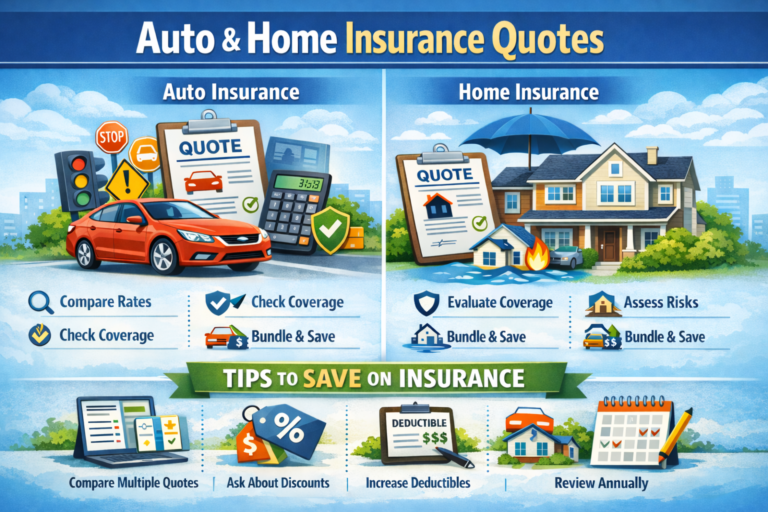
Home and Auto Insurance Quotes
Home and Auto Insurance Quotes: How to Compare Rates and Save More
Finding the right home and auto insurance quotes can feel overwhelming, especially when every provider promises the best coverage at the lowest price. The truth is that the cheapest quote is not always the best option, and the most expensive policy is not always the most protective. A smart insurance decision comes from understanding what you are paying for, how quotes are calculated, and which details matter most for your home, your car, and your budget.
Insurance is designed to protect the things you value most. Your home is one of your biggest investments, and your vehicle is essential for daily life, commuting, and family needs. When you shop for both policies together or compare them side by side, you can often uncover discounts, better coverage choices, and long-term savings that are easy to miss when buying insurance separately.
In this guide, you will learn how home and auto insurance quotes work, what affects pricing, how to compare policies correctly, and how to lower your premium without sacrificing important protection. Whether you are buying insurance for the first time, switching providers, or simply reviewing your current policies, this article will help you make a more confident decision.
What Are Home and Auto Insurance Quotes?
A home and auto insurance quote is an estimate of what an insurer may charge you for coverage based on the personal and property details you provide. These quotes are usually generated using information such as your address, home value, vehicle type, driving history, credit-based factors in some regions, and the amount of coverage you want.
A home insurance quote typically includes protection for the structure of your home, personal belongings, liability coverage, and additional living expenses if your home becomes temporarily uninhabitable due to a covered event. Depending on the insurer and policy, it may also include optional protections for water backup, identity theft, high-value items, or extended replacement cost.
An auto insurance quote generally includes liability coverage, collision coverage, comprehensive coverage, uninsured or underinsured motorist protection, medical payments or personal injury protection, and optional extras such as roadside assistance or rental reimbursement.
When consumers search for home and auto insurance quotes, they are often looking for a combination of affordability and peace of mind. The quote itself is only the starting point. It gives you a snapshot of pricing, but the real value comes from examining the details behind the number.
Why Comparing Home and Auto Insurance Quotes Matters
Many people accept the first quote they receive or renew their policies automatically every year. That approach can cost more over time. Insurance rates can change based on market conditions, claims trends, inflation, property values, repair costs, weather risks, and changes in your own profile.
Comparing home and auto insurance quotes helps you see how different insurers assess risk. One company may offer a better rate for your driving history, while another may be more competitive for your home’s location or age. Shopping around can reveal major differences in price even when coverage looks similar at first glance.
It also helps you spot coverage gaps. Some policies appear less expensive because they offer lower limits, higher deductibles, or fewer endorsements. Without comparing the details, you may not realize that a low-cost quote could leave you underinsured after a major loss.
A careful comparison gives you a stronger chance of finding the right balance between premium, deductible, and coverage. It also puts you in a better position to bundle policies, ask for discounts, and negotiate with confidence.
Benefits of Bundling Home and Auto Insurance
One of the most common ways to save is by bundling home and auto insurance with the same company. Many insurers offer significant discounts when you purchase both policies together. This is one reason so many people search for home and auto insurance quotes instead of looking at each product separately.
Bundling can lead to lower premiums, but the benefits often go beyond price. Managing both policies under one insurer can simplify billing, renewals, customer service, and claims communication. Some companies may even offer package perks, such as a single deductible in certain claim situations or added loyalty discounts over time.
However, bundling is not always the best deal in every case. Sometimes one company may be excellent for home coverage but less competitive for auto insurance. That is why it is important to compare the bundled price against separate policies from other providers. A true comparison should look at total annual cost, coverage quality, deductible levels, customer support, and claims reputation.
The goal is not simply to bundle. The goal is to determine whether bundling gives you real value.
Factors That Affect Home Insurance Quotes
Home insurance pricing is based on many variables, and understanding them can help you get more accurate home and auto insurance quotes.
Your home’s location plays a major role. Insurers evaluate local risks such as severe weather, wildfire exposure, crime rates, proximity to fire stations, and regional rebuilding costs. Even two homes with similar square footage can receive very different quotes depending on their ZIP code.
The age and condition of the property are also important. Older homes may cost more to insure because of outdated roofing, plumbing, electrical systems, or heating equipment. Renovations and modern upgrades can improve your insurability and may lead to lower premiums.
The replacement cost of the house matters more than the market value in many cases. Insurance is based on what it would cost to rebuild the home after a covered loss, not necessarily what you paid for it or what it could sell for today.
Your deductible affects price as well. A higher deductible usually lowers your premium, but it means you will pay more out of pocket if you file a claim. Other factors may include your claims history, credit-based insurance score, where permitted, the materials used to build the home, and safety features such as alarm systems or smart leak detectors.
Factors That Affect Auto Insurance Quotes
Several personal and vehicle-related details also shape auto insurance quotes. When comparing home and auto insurance quotes, it helps to know why rates vary so much from one driver to another.
Your driving record is one of the biggest pricing factors. Accidents, speeding tickets, DUI convictions, and prior claims can all increase your premium. Drivers with a clean history generally receive better rates.
Your age and years of driving experience often affect pricing, too. Younger drivers and newly licensed drivers tend to pay more because insurers see them as higher risk. In many markets, mature drivers with strong records may receive lower premiums.
The vehicle itself matters. Insurance companies consider the make, model, year, repair costs, theft risk, safety ratings, and likelihood of severe damage in a collision. A luxury car or sports vehicle may cost more to insure than a family sedan or compact SUV.
Mileage, commuting habits, garaging location, and coverage selections also influence the quote. Choosing comprehensive and collision coverage, lowering your deductible, or adding optional protections can raise your premium. At the same time, discounts for safe driving, anti-theft devices, telematics participation, and low annual mileage may reduce it.
How to Compare Home and Auto Insurance Quotes Correctly
The best way to compare quotes is to make sure each one is built on similar coverage terms. If one quote includes higher liability limits and another uses a much higher deductible, the prices are not directly comparable.
Start by reviewing dwelling coverage for your home policy. Make sure it reflects realistic rebuilding costs. Then review personal property limits, liability coverage, and whether optional endorsements are included. For auto insurance, compare bodily injury liability, property damage liability, collision, comprehensive, uninsured motorist coverage, and any add-ons.
Next, look at deductibles. A lower premium may not be attractive if the deductible is so high that you would struggle to pay it after a loss. Try to find a deductible amount that protects your budget while still keeping premiums manageable.
Also, check exclusions and limitations. For example, standard home policies may not include flood insurance or certain types of water damage. Auto policies may differ in rental car benefits, roadside assistance, and glass coverage.
Finally, consider the insurer’s claims process and service reputation. A quote is only valuable if the company responds fairly and efficiently when you need help most.
Ways to Save on Home and Auto Insurance Quotes
If you want lower home and auto insurance quotes, several strategies may help reduce your costs without weakening your protection.
Bundling remains one of the most effective savings methods. Beyond that, raising your deductible can lower your premium, as long as the out-of-pocket cost remains realistic for your emergency budget.
Improving your home’s safety can also help. Security systems, smoke detectors, storm shutters, fire-resistant roofing, and water leak sensors may qualify for discounts. For auto insurance, defensive driving courses, anti-theft devices, and safe driving apps or telematics programs can lead to savings in many cases.
Maintaining a strong credit profile may also help in locations where credit-based insurance scoring is allowed. Paying bills on time and reducing debt can positively affect your financial profile, which some insurers consider when setting rates.
You should also ask about loyalty discounts, claim-free discounts, paperless billing savings, paid-in-full options, and discounts for newer homes or vehicles with advanced safety features. Sometimes the easiest way to save is to ask what discounts are available and which ones you are currently not receiving.
Common Mistakes People Make When Shopping for Quotes
A major mistake is focusing only on price. A low premium can look attractive, but it may come with reduced coverage, stricter limitations, or a deductible that is too high. The true test of a policy is how well it protects you after a loss.
Another common mistake is providing incomplete or inaccurate information. If the details you submit are wrong, your home and auto insurance quotes may not reflect the actual premium you will receive. Be honest about your property, driving history, home updates, and vehicle use.
Some shoppers fail to review their coverage annually. Life changes such as home renovations, a new driver in the household, a paid-off car, or the purchase of valuable belongings may require updates to your policy.
People also overlook exclusions. Homeowners may assume flood damage is included when it is usually separate. Drivers may assume every policy includes rental reimbursement or roadside assistance when those features are often optional.
Lastly, many consumers do not compare enough insurers. Looking at only one or two quotes may limit your chances of finding the best fit.
When to Request New Home and Auto Insurance Quotes
You do not need to wait for your renewal notice to shop for insurance. In fact, several life events make it a smart time to get fresh home and auto insurance quotes.
You should consider new quotes if you buy a home, move to a new area, add or remove a vehicle, add a teen driver, get married, improve your credit, or complete major home upgrades. These changes can all influence your premium.
It is also wise to compare quotes if your renewal rate increases sharply without a clear reason. Sometimes market-wide pricing changes are unavoidable, but sometimes another insurer may offer a more competitive rate for the same level of protection.
If you have been claim-free for several years, your profile may have improved enough to qualify for better pricing. Similarly, if your car is older and fully paid off, you should reconsider whether full coverage still makes financial sense based on its actual cash value.
Regular insurance shopping helps ensure your policy stays aligned with your needs and your budget.
Online Quotes vs Working With an Insurance Agent
Many people now get home and auto insurance quotes online because it is fast and convenient. Online comparison tools can provide multiple estimates quickly and help you see a range of pricing options.
This approach is useful when you want speed and broad visibility. It also allows you to explore different deductibles and coverage levels at your own pace. For straightforward insurance needs, online quotes may be enough to make a confident decision.
Working with an insurance agent can be helpful when your situation is more complex. For example, if you own a high-value home, have multiple vehicles, need extra liability protection, or want to understand endorsements more clearly, an agent can explain the trade-offs and recommend suitable coverage.
An independent agent may also compare quotes from multiple carriers on your behalf, potentially saving time while still giving you options. The best route often depends on how comfortable you are reviewing policy details yourself.
Choosing the Best Coverage for Long-Term Protection
The best insurance policy is not always the least expensive one. A strong policy fits your financial situation, protects your assets, and reduces the risk of major out-of-pocket losses.
For home insurance, that means making sure your dwelling coverage is adequate, your liability limits are sensible, and your belongings are protected at realistic values. For auto insurance, it means selecting liability limits that protect your income and assets, along with optional coverages that make sense for your vehicle and lifestyle.
You should also think beyond the premium. Ask yourself how a claim would affect your finances. Can you cover the deductible comfortably? Would the policy provide enough support after a major accident or serious property damage? These questions matter just as much as the monthly bill.
A thoughtful insurance decision should support both immediate savings and future stability.
Conclusion
Shopping for home and auto insurance quotes is one of the smartest ways to protect your home, your vehicle, and your finances. Quotes help you understand pricing, compare coverage, and discover discounts, but the best choice comes from looking deeper than the headline number.
By comparing similar coverage, reviewing deductibles, asking about bundle savings, and understanding the factors that affect insurance rates, you can make a more informed decision. Whether you prefer online tools or guidance from an experienced agent, the key is to compare carefully and review your coverage regularly.
The right policy should give you more than a low premium. It should give you confidence that when something unexpected happens, you have the protection you need. When you take the time to compare home and auto insurance quotes the right way, you put yourself in a stronger position to save money and secure better peace of mind.