Auto Insurance Quotes Florida
Auto Insurance Quotes Florida: How to Find Affordable Coverage Without Sacrificing Protection
Searching for auto insurance quotes Florida drivers can trust often feels overwhelming. Rates vary widely, policy terms can be confusing, and every insurer promotes itself as the cheapest option. The truth is that the best policy is not simply the lowest price. It is the coverage that protects your car, your finances, and your peace of mind at a rate that fits your budget. Understanding how Florida insurance works helps you compare quotes more confidently and choose better long-term value.
Florida is different from many other states because insurance costs are often higher, weather risks are greater, and legal requirements can create confusion for drivers. A quote that looks cheap at first glance may leave you underinsured after an accident, theft, flood, or lawsuit. That is why smart shoppers compare more than premiums alone. They review deductibles, limits, exclusions, discounts, and company reputation. When you know what affects your premium, you can take practical steps to lower costs without reducing essential protection.
Why Auto Insurance Quotes in Florida Are So Important
Florida drivers face unique conditions that make shopping for insurance especially important. Busy highways, heavy tourist traffic, storm exposure, and a large number of uninsured motorists all influence rates. Because insurers calculate risk differently, two companies may offer very different prices for the same driver and vehicle. That is why getting several auto insurance quotes from Florida residents can compare side by side is one of the smartest ways to avoid overpaying while still maintaining reliable financial protection.
A quote also gives you a clearer view of what an insurer is actually offering. Many drivers focus only on the monthly bill, but coverage details matter just as much. A lower-priced quote may include minimal protection, high deductibles, or fewer optional benefits. By comparing quotes carefully, you can identify the policy that balances affordability and security. That extra effort matters in Florida, where accidents, weather damage, and repair costs can make the wrong insurance choice very expensive later.
Understanding Florida Auto Insurance Requirements
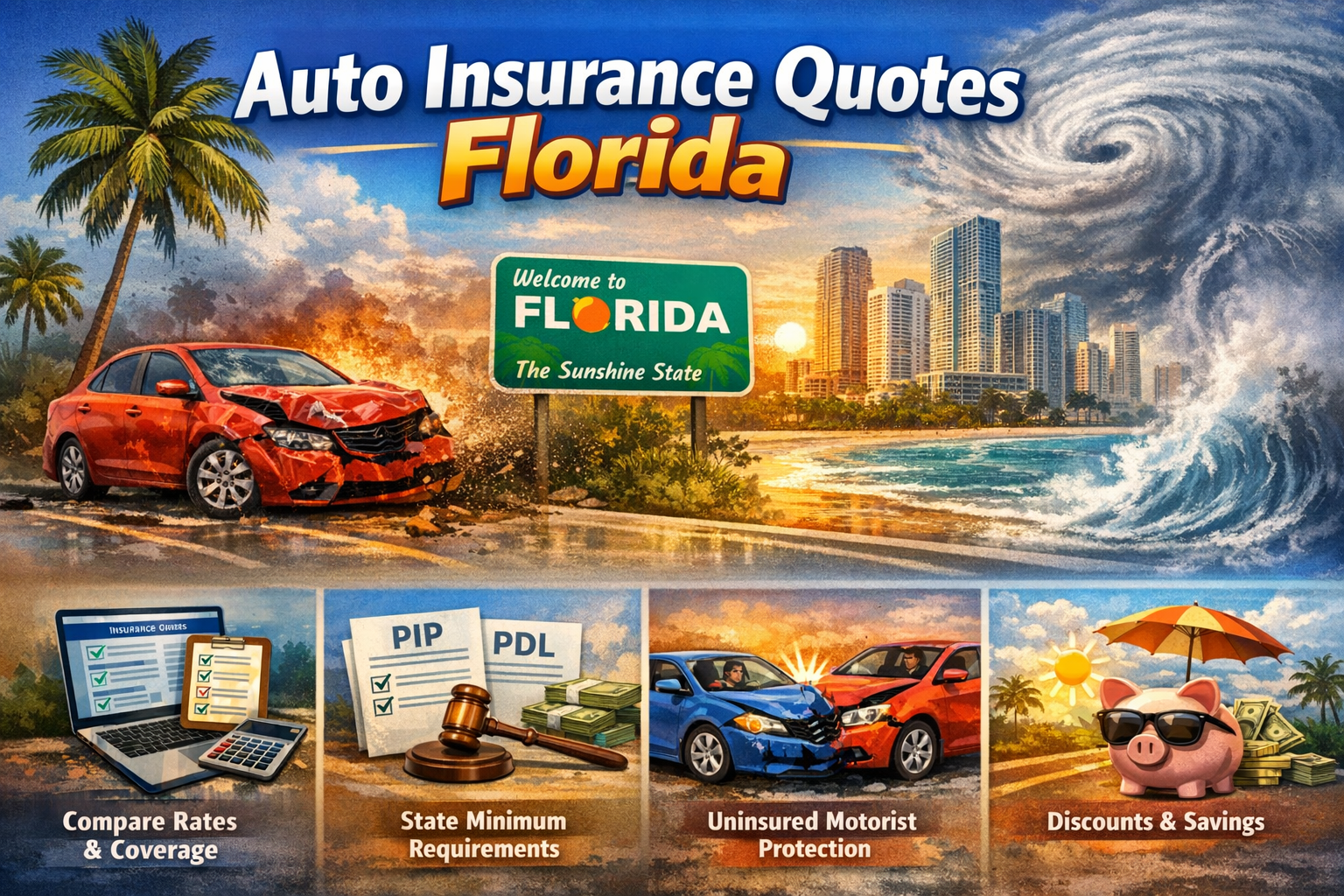
Florida law requires drivers to carry certain minimum coverages, but those minimums are often misunderstood. Most drivers need Personal Injury Protection, commonly called PIP, and Property Damage Liability, known as PDL. These minimums help cover medical expenses and damage you cause to another person’s property. However, state minimum coverage does not always provide enough protection in a serious accident. Many drivers discover too late that legal minimums are only a starting point, not a complete insurance strategy.
PIP can help pay for your own medical expenses after an accident, regardless of who caused it, while PDL covers damage you cause to someone else’s vehicle or property. What many people do not realize is that these coverages may still leave large gaps. Bodily injury liability is not always required for every driver, but it can be extremely valuable. If you want stronger financial protection, you should often go beyond the minimum when comparing Florida auto insurance quotes.
Minimum Coverage Is Not Always Enough
Choosing only the minimum required coverage may seem like the fastest way to save money, but it can create major financial risk. A single accident involving injuries, multiple vehicles, or expensive repairs can exceed the limits of a basic policy very quickly. Once your policy limit is used up, you may be responsible for the remaining costs yourself. That can mean paying out of pocket for vehicle damage, medical bills, legal fees, or judgments that affect your savings.
Many Florida drivers add collision, comprehensive, bodily injury liability, uninsured motorist coverage, and roadside assistance for a stronger safety net. While this increases the premium, it can also prevent severe financial hardship after a crash or storm. When you request auto insurance quotes in Florida, ask for several coverage levels, not just the bare minimum. Comparing basic and enhanced policies helps you see how much extra protection costs and whether the added value makes sense for your situation.
What Affects Auto Insurance Quotes in Florida
Insurance companies use many factors to calculate premiums, and each factor can influence your quote in a different way. Your age, driving history, ZIP code, type of vehicle, annual mileage, and previous claims all play a role. In Florida, local weather patterns and traffic density can matter even more than in other states. Drivers in crowded cities or coastal regions often pay more because insurers see those areas as having greater claim potential and repair-related expenses.
Credit-based insurance scoring may also affect premiums in some cases, depending on the insurer and policy structure. In addition, the amount of coverage you choose has a direct impact on your rate. Higher liability limits, lower deductibles, and optional protections will usually increase the premium. Paying slightly more for better coverage may be worthwhile. The goal is not to find the smallest number possible. It is to find the best price for the protection you truly need.
Driving Record and Claims History
Your driving record is one of the strongest influences on the quotes you receive. Drivers with clean records often qualify for lower premiums because insurers view them as less likely to file costly claims. Speeding tickets, at-fault accidents, reckless driving citations, or DUI-related offences usually increase premiums significantly. Even one recent violation can raise rates for several years. That is why safe driving habits are one of the most effective long-term ways to keep Florida auto insurance affordable.
Claims history matters too, even if every claim was not your fault. Frequent claims can signal a higher risk to insurers and may lead to increased premiums or fewer discount opportunities. Before filing a minor claim, some drivers compare the repair cost with their deductible and long-term premium impact. This should be done carefully, but the idea is simple. Insurance is best used for meaningful losses. Staying claim-conscious can help preserve better quote options when you shop later.
Vehicle Type and Usage
The car you drive affects your insurance rate more than many people expect. Luxury vehicles, sports cars, and models with expensive parts usually cost more to insure because repairs and replacements are pricier. Cars with strong safety ratings, anti-theft systems, and lower theft risk may qualify for better premiums—even the age of the vehicle matters. A new car may need broader protection, while an older paid-off vehicle may allow more flexibility in coverage choices.
How you use your car also changes your quote. Daily commuters who spend long hours on the road often pay more than drivers who use their vehicles occasionally. If you drive for business, deliveries, or rideshare platforms, you may need special coverage that increases premiums. Accurate information is essential when requesting quotes. If the insurer later finds that your vehicle use was misrepresented, it can affect claim payments. Honest details help you receive more accurate and dependable pricing.
How to Compare Auto Insurance Quotes the Right Way
The most effective way to compare quotes is to make sure each insurer is pricing the same coverage levels. If one quote includes only minimum coverage and another includes collision, comprehensive, and uninsured motorist protection, the prices will not be truly comparable. Start by deciding what level of coverage you want, then request matching quotes from multiple providers. This gives you a realistic view of how much each insurer charges for the same general protection package.
You should also review the deductible, policy limits, exclusions, and optional features on every quote. Some policies include extras like rental reimbursement, roadside assistance, glass coverage, or accident forgiveness, while others charge more for those features. Customer service and claims satisfaction matter too. A cheap premium loses its appeal if the insurer is difficult to reach after an accident. The best comparison process looks at total value, not just the lowest number on the screen.
Compare Monthly Cost and Total Annual Premium
Many drivers focus on monthly payments because they are easier to fit into a budget, but the annual premium often tells a more complete story. Some insurers charge installment fees for monthly billing, which means you may pay more over the course of the year. When reviewing auto insurance quotes in Florida, ask for both the monthly amount and the full annual price. This helps you understand the real cost and can reveal whether paying in full offers meaningful savings.
Looking at the annual cost also prevents small monthly differences from distorting your decision. A quote that seems only slightly more expensive per month may include much better coverage, a lower deductible, or useful optional protections. Likewise, a very cheap monthly figure can hide limited benefits or higher out-of-pocket risk. Comparing the total cost next to the total value makes decision-making clearer. This approach keeps you focused on protection and price together instead of chasing a misleading headline number.
Best Ways to Lower Auto Insurance Quotes in Florida
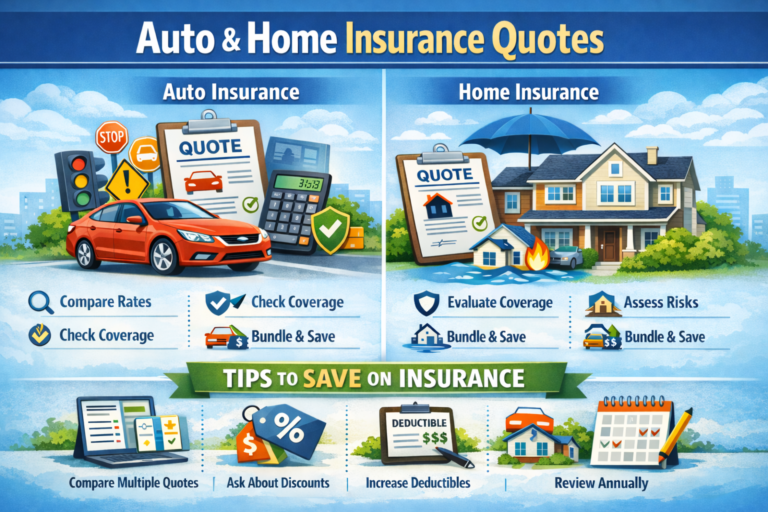
Lowering your premium starts with improving the factors you can control. A clean driving record, timely payments, and careful claim habits all support better rates over time. You can also ask about common discounts, including safe driver, good student, multi-car, bundling, paperless billing, autopay, and defensive driving course savings. Not every discount is advertised clearly, so it helps to ask insurers directly. Small discounts can add up to substantial yearly savings when combined strategically.
Raising your deductible is another common way to reduce premiums, but it should only be done if you can comfortably afford that amount in an emergency. You can also review whether certain optional coverages still make sense for an older vehicle. If your car’s value is low, paying for collision or comprehensive coverage may not always be cost-effective. The smartest savings strategy is balanced. Cut unnecessary costs, but do not remove protection you would struggle to replace after a major loss.
Bundle Policies for Better Rates
Bundling is one of the easiest ways to save on insurance in Florida. Many insurers offer discounts when you combine auto insurance with homeowners, renters, condo, or even life insurance. This can reduce premiums and simplify account management by keeping multiple policies with one provider. Bundling does not always guarantee the absolute cheapest total price, but it often creates meaningful savings. It can also make billing, renewals, and customer support more convenient for busy households.
Before bundling, compare the total package cost instead of assuming it is the best deal automatically. Sometimes, a strong auto rate from one company and a separate home policy from another still produces better overall value. The key is to compare both options carefully. Ask for individual and bundled quotes, then review coverage details side by side. A smart bundle saves money without weakening protection. That is the combination most Florida drivers should look for when shopping.
Important Coverage Options Florida Drivers Should Consider
Beyond required coverages, Florida drivers often benefit from several optional protections. Collision coverage helps pay for damage to your car after an accident, while comprehensive coverage can help with theft, vandalism, fire, falling objects, and some weather-related losses. Uninsured or underinsured motorist coverage is especially worth considering because not every driver carries enough insurance. These coverages can strengthen your policy and reduce the financial shock that comes with accidents, theft, or severe storms.
Medical payments coverage, rental reimbursement, and roadside assistance can also add convenience and support during stressful situations. While not every driver needs every optional feature, choosing selectively can improve the usefulness of your policy. For example, rental reimbursement may be valuable if you rely on your car daily for work or family responsibilities. The best way to choose is by thinking about your real risks. Insurance works best when it reflects how you live and what you need protected.
Uninsured Motorist Coverage Matters in Florida
Uninsured motorist coverage is often one of the most valuable additions to a Florida policy. If another driver causes an accident and lacks enough insurance, this coverage may help protect you from major financial loss. Medical costs, missed work, and recovery expenses can escalate quickly, especially after a serious collision. Without adequate protection, you may struggle to recover damages fully. That is why many experienced drivers treat uninsured motorist coverage as a practical necessity rather than an optional extra.
This coverage can be especially important in areas with dense traffic and frequent accidents. Even if the at-fault driver has insurance, their limits may be too low to cover all expenses. Adding uninsured or underinsured motorist protection can provide a stronger cushion for injuries and related losses. When requesting auto insurance quotes in Florida, always ask how much this option adds to the premium. In many cases, the extra cost is modest compared with the protection it offers.
Online Quotes vs. Local Insurance Agents
Online quote tools are fast, convenient, and useful for collecting multiple estimates in a short time. They allow you to compare pricing from home, adjust coverage options quickly, and get a general idea of market rates before speaking with anyone. For many drivers, online research is the ideal starting point. It saves time and makes it easier to understand pricing trends. However, the fastest quote is not always the most complete or personalized option available.
A local insurance agent can provide context that online forms may miss. They can explain Florida-specific requirements, identify gaps in your coverage, and suggest policy changes based on your vehicle, location, and driving habits. Agents may also help you navigate claims questions, bundling options, or policy updates later. The best approach for many drivers is a combination of both methods. Use online tools for broad comparison, then consult a knowledgeable agent before making the final decision.
Common Mistakes to Avoid When Shopping for Florida Auto Insurance
One common mistake is choosing a policy based only on price. While affordability matters, the cheapest quote may come with high deductibles, weak limits, or important exclusions. Another mistake is failing to update policy details after moving, changing vehicles, or adding drivers. Inaccurate information can lead to pricing errors or coverage issues later. Many drivers also forget to ask about discounts or skip comparing enough insurers. Better decisions usually come from a slower, more careful review.
Another major error is renewing the same policy year after year without shopping around. Rates change frequently, and loyalty does not always guarantee lower pricing. Comparing quotes annually can reveal new discounts or better coverage options. Drivers also sometimes drop important coverages to save money without considering the replacement risk. A balanced policy should reflect your vehicle value, financial situation, and local driving conditions. Avoiding these mistakes can help you secure smarter, safer, and more cost-effective insurance.
Final Thoughts on Auto Insurance Quotes in Florida
Finding the right auto insurance quotes Florida drivers need takes more than clicking on the cheapest offer. It requires understanding state requirements, comparing equal coverage levels, reviewing deductibles and limits, and choosing protection that fits your real-world risks. Florida’s driving environment makes insurance especially important so that a well-chosen policy can protect both your vehicle and your financial future. The best quote is the one that combines fair pricing, dependable coverage, and a company you can trust.
Take time to compare multiple insurers, ask questions, and review optional coverages carefully before committing. Think beyond the monthly payment and consider what would happen after an accident, storm, theft, or lawsuit. Insurance should work when life becomes expensive and stressful, not just when the bill arrives. By shopping strategically and focusing on value, you can find Florida auto insurance that supports your budget while delivering meaningful protection where it matters most.